Showing posts with label Yellow-winged Cacique. Show all posts

Sunday, May 4, 2014

YOLO in Yelapa (#295-299)

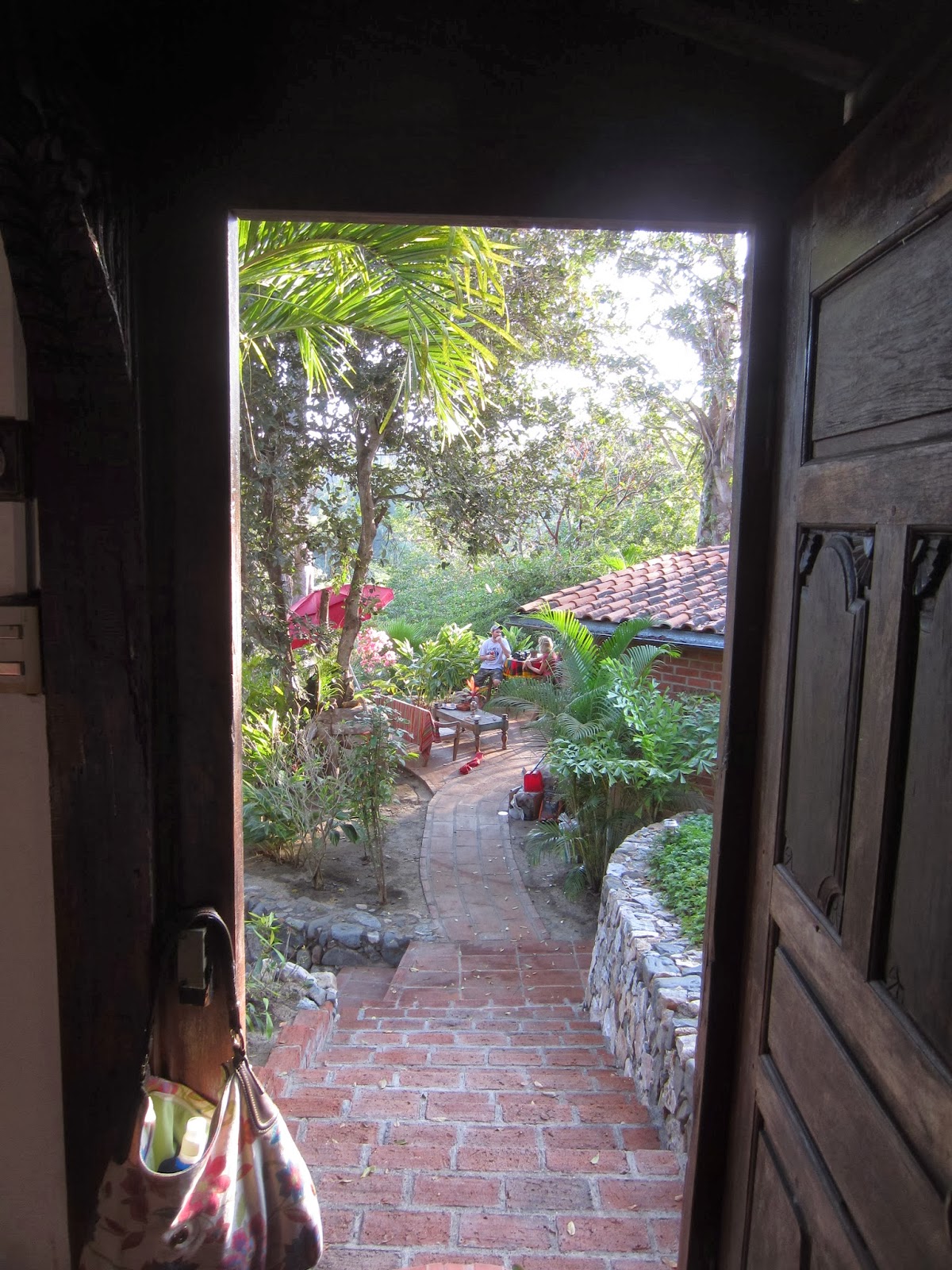
Yelapa...was like a dream. One of the first places where I felt like we were someplace different, and finally got away from everything. The only access to Yelapa is by a 45-minute water taxi from Puerto Vallarta. Yelapa just got electricity 10 years ago, and there are no roads (since there are no cars), just little paths zigzagging all through the village. I'd been wanting to go there since about five years ago when I stumbled on the website for one of the casas (private rental--there aren't really any typical hotels there). It took me forever to refind the place on the Internet, but I did and we spent three glorious days in Yelapa.

It's such a neat little spot and I'm sure the ex-pats there would kill me for spreading their little secret. We met some great people (a group of older folk who showed up at Tacos y Mas and there were no tables left...since we had seats left we asked if they wanted to join us at our table and they did. They told us about what not to miss, and we ended up seeing them all over...it's hard not to in that little village!)

There is a combination of indigenous people and ex-pats, and it's just kind of slow and lazy and great. There's not much going on, so no need to plan, but there is certainly an odd rhythm to this little village. As soon as the sun rises (which was amazing from our suite which was overlooking the ocean, and no windows or walls--basically a massive covered balcony---so it was just like us, the end of our bed and then OCEAN), you could see all the fishing boats heading out at the crack of dawn, and coming back into the pier a few hours later with the bonitas they'd caught. Sometime after the tourist boat from Puerto Vallarta gets in, but most of the tourists just come for the day and stick to the strip of sand across the river, so it gets busy (but not really) until the last water taxi leaves around 4 or 5 and then it quiets down again. Then if you want, there are a few restaurants (basically these patio affairs with plastic chairs in a yard), but you have to know which day of the week it is because there are usually only one or two open per day, and at certain times. And at night, there might be live music, or not, but everybody knows where to go on which night of the week.

On our first full day in Yelapa, we went for what was supposed to be a short walk around the village The thing I have discovered real time and bird time is like real time and football time. As a child I'd ask my dad how much longer, and he'd say 2 minutes. And then 2 minutes later it would still be a minute left. How did that make sense? Well, what's supposed to be a short walk quickly becomes a four-hour adventure when you have a camera and binoculars in your hands.

On our first walk into the village, we spotted a really exciting bird...black vultures on the ground, so close to us. It didn't take long for us to realize that there are black vultures everywhere in Yelapa.

 #295: Black Vulture; Mexico, February 2014
Black vultures and pelicans in the background...not shy around here
On the way into the village, this poster was on a tree, asking people not to poach the parrots.
And it was nice that just across from that poster, we saw a parakeet, wild of course. This picture is of a parakeet we saw later. You always heard them before you saw them, and they blend in so well, you could stare at the tree five minutes before you found them (and sometimes you still couldn't!)

#296: Orange-fronted parakeet; Yelapa, Mexico; February 2014

Their bulgy yellow eyes often made them look funny.

This really handy posted was posted in town, and was how I managed to figure out the parakeets we saw earlier in Sayulita. The mini guide I'd brought didn't have all these birds so I took a picture!


And how apt that we were staying at Casa Pericos? (House of Parrots)

There is a river that runs through Yelapa, splitting the beach from the village. The directions in Yelapa are not typical and quite interesting..."it's upriver," "it's down river," "past the tortilla place," "on the way to the telephone tower," "it's by the point," "near the second water taxi dropoff."
Map by "Map Jeff" who we met on the water taxi.

You can cross the river at the bridge by wading through it, or you can cross farther up at the bridge. Following the river is an excellent choice, and the basin behind the sand bar has excellent birding opportunities!
Juvenile little blue. Easy to confuse with the egrets and other herons!
Little boy blue
Little blue - big awesome
Following the river, you get some water-loving birds in the river, but other birds on the sides of the trail too. Golden-cheeked woodpeckers were really common in this part of Mexico and we often saw them in pairs.


I don't think I could post all these pictures from Mexico and not include a great-tailed grackle...they are as common there as the common grackle is at home!
The caciques were ubiquitous as well.

The caciques were most amusing when they tossed up their lids.They are incredibly loud birds.

#297: West Mexican Chachalacha; Yelapa, Mexico; February 2014
I didn't realize it at the time, but we saw a different type of chachalacha in Yelapa! Apparently I cannot read Mexican range maps...we were farther south than I realized!


It's amazing that even when you don't know the bird calls of birds in a place you're not familiar with that you can still recognize a sound you haven't heard yet.

Looking through the mini guide that I had on the plane, Matt and I loved picking out random birds we never heard of, and the ones with the weirdest names ("Yellow-throated euphonia!" "Montezuma's Oropendola!" Black-headed saltator!" Pauraque!" "Squirrel Cuckoo!" "Blue-crowned Motmot!"). It made it all the more wonderful when we spotted some of these birds, as if the oddness of their names made us incredulous of their real-life existence.

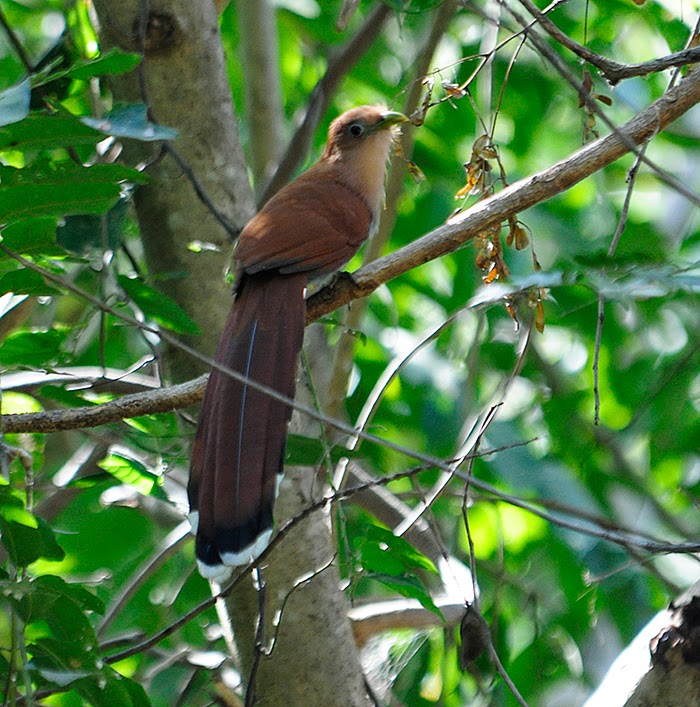
#298: Squirrel Cuckoo; Yelapa, Mexico; February 2014
#299: Elegant Trogon; Yelapa, Mexico; February 2014
The elegant trogon was one of the most majestic birds that we spotted in Mexico. It was on my list of the ones I really wanted to see. I saw them only on a couple occasions, and they were always pretty quiet, except for our last day in Yelapa when I had a chance to see one feeding. Seriously fantastic. Sometimes in awe of the beauty of some of nature's little beings.


Well, I don't mean to be a tease and it makes no sense to stop here but I have actually reached the limit for tags for this post. You may have noticed I stopped at #299.....!

Wednesday, February 26, 2014

Mexico I: Sweet tweet Sayulita (#281-289)

In our house, we like to go big on Valentine's Day. That means that for the second time now, we've loaded ourselves onto flights to my favourite escape destination--Mexico. Because airports are so romantic right?

Edge rolled over in bed and presented my with my Valentine in the morning -
Mexico Birds: A Folding Pocket Guide to Familiar Species, (which turned out to be the first of many surprises). Some girls want roses, some want diamonds and I get excited about a $6 bird guide from the Internet. I had wanted to order it, but they wouldn't ship to Canada. Anyways, now I had it in my little hands and was ready to go!

After a rather eventful flight trajectory to Puerto Vallarta, we finally landed. We like to play a little game whenever we land at a foreign airport--see who can spot the first bird, and the first life bird (bonus if it's the same bird).
The first destination was Sayulita (and pardon the bum shots), north of Puerto Vallarta by about an hour. It's a little beach town and we stayed just a bit out of the town in the jungle in Villa Bali at a privately owned casita. This meant that in the morning we were up in the trees (as I've discovered, it's key if you can somehow get yourself relatively close to the tree tops, so being on a hillside is perfect). The owner of our vacation rental, Liz, joined us for some morning birdwatching. 
View from our casita

Home! For a few nights.
The very first obvious sounds were the chachalachas and the caciques.  

The chachalachas I liken to our wild turkeys a bit, large and quite awkward. They fumble around the trees, eating berries.  

# 281: Rufous-bellied (or Wagler's) Chachalaca; Sayulita, Mexico, February 2014

Similarly loud with a call described by Liz as "Bryan," the caciques were ubiquitous but decidledly difficult to photograph! I'll add more photos of these birds in later posts. They have a great tuft of hair that they flip forward. Unfortunately you can't quite see it here. 

#282: Yellow-winged Cacique; Sayulita, Mexico, February 2014
We were both a little dumbstruck by the magnificence of the black-throated magpie jays. They came flying overhead  with their long tails trailing behind. They came in a group of four or five, but didn't stay long. Don't be deceived by their names...they are far larger than our regular jays, at
58.5 - 76.5 cm long, they are truly magnificent!

#283: Black-throated Magpie Jay; Sayulita, Mexico, February 2014

It still amazes me to see the diversity of woodpeckers in Mexico--for some reason I associate them as northern birds--but that's false!

 #284: Golden-cheeked woodpecker; Sayulita, Mexico, February 2014

You might need to do a double take to realize that this is not a pileated woodpecker. They must be cousins!

#285: Lineated Woodpecker; Sayulita, Mexico, February 2014

Having Liz on hand was great as she was already familiar with some of the birds and could name them for us, and she also had a copy of the book I had ordered before leaving but hadn't received in time. We soon realized that the quick reference pamphlet was missing a good number of our sightings. We had our National Geographic Birds of North America Guide, which I love, but it too was missing many birds--which leads me to a real peeve---why do they call it the Birds of North America when it doesn't have all the birds of North America? Because Mexico is definitely part of North America....HELLO! So they should really call it the Birds of USA and Canada, because it's rather misleading! Anyways, I also just found that Cornell has an online guide to Neotropical Birds.

#286: Masked Tityra; Sayulita, Mexico, February 2014


The parrot family birds are fun and tricky! Given their colour, they blend in spectacularly well with their surroundings. You can hear them loud and clear and not see the darn things. Matt spotted these, and pointed them out and I looked forever and ever and had the hardest time finding them. Nevermind that there are around 10 of them in this shot! It's like those games on the cereal box were you have to find all the items...I've included this one full size so you can enlarge and see how good your sleuthing skills are!

#287: Mexican (or Blue-rumped) Parrotlet; Sayulita, Mexico, February 2014
 Close up. Did you find them all?
 I love that these were either ALWAYS in pairs, or snuggled up together in a line.

There was one rather elusive bird directly in front of the house. We could tell it was there because of the leaves moving around, but it was so hard to spot. Luckily, we got a good enough look to get a quick shot of another bird with a cousin up north.

#288; Rufous-backed Robin; Sayulita, Mexico, February 2014
Remember that post I wrote last time I was in Mexico about grey and yellow flycatchers of Mexico? (well, it's my second most popular post--apparently these birds don't give only me headaches!). This reminds me of one of the ones I couldn't identify. I distinctly recalled the Greater Kiskadees on the Gulf side, but these birds seemed smaller (and habitat different). So for now, I'm not too sure what this is. But it sure is nice, don't you think?
We both spotted this little bird flitting around, and Matt said, hey there's a black and white warbler. Now I'm getting a better look, and it's not at all. I already have a Black-Throated Green Warbler, a Black-Throated Blue Warbler, and now I have a Black-Throated Grey Warbler to add to my collection!

#289: Black-Throated Grey Warbler; Sayulita, Mexico, February 2014
Thought I'd add in this little one that we also have at home, but not the variation that we normally see--a yellow-rumped warbler, but an Audubon's.
This one I am still researching a bit. I'm not sure between the warblers and female tanagers. If I figure it out I'll get back to you!
We enjoyed a few good hours of birding before heading into town. More on that later!